
Guide
Which papers to keep after scanning, and which you can shred
Keep the originals of papers that prove who you are or what you own: birth and marriage certificates, Social Security cards, passports, citizenship papers, wills, powers of attorney, vehicle titles and deeds. The FTC says bank statements, pay stubs, paid bills and deposited checks can be kept for about a year, and the paper shredded if you can get them electronically. Keep tax records at least three years, longer in some cases. Shred anything with personal details.

This page is general information, not legal or tax advice. Rules differ by country and state, and they change. Check the official pages linked in the sources, and ask a professional about your situation.
Keep the original, always
Some papers are proof in themselves. Offices that ask for them often want the original or a certified copy, and a scan or a photocopy won’t do. The FTC’s list of papers to keep forever, and lock up:
- Birth certificates or adoption papers
- Social Security cards
- Valid passports
- Citizenship or residency papers
- Marriage licenses and divorce decrees
- Military records
- Wills, living wills and powers of attorney
- Retirement and pension plans
- Family members’ death certificates
- Vital health records, especially those from before electronic health records
Scan these too. A scan is useful for filling in forms, for proving you had the document if it’s lost, and for applying for a replacement. But the paper goes in a safe place: a fire-resistant box at home, or a safe deposit box.
Keep while you own it
The FTC lists papers to keep for as long as you own the thing they’re about:
- Vehicle title
- Home title or deed
- Mortgage and vehicle loan documents
- Home improvement receipts
- Rental agreements and leases
- Appliance sales receipts and warranties
Keep the originals of titles and deeds. For the rest, a good scan is often enough day to day, but keep the paper for anything you may need to prove later, such as home improvement receipts that affect your tax when you sell. The IRS says to keep records relating to property until the period of limitations expires for the year you dispose of the property.
Tax records: at least three years
The IRS sets out how long to keep tax records, based on how long it has to assess tax:
| Situation | Keep records for |
|---|---|
| Most returns | 3 years |
| Employment tax records | At least 4 years after the tax is due or paid, whichever is later |
| You didn’t report income you should have, and it’s more than 25% of the gross income on your return | 6 years |
| You claim a loss from worthless securities or a bad debt deduction | 7 years |
| You didn’t file a return, or filed a fraudulent one | Indefinitely |
The FTC’s own list puts income tax returns, canceled checks, receipts, W-2s, 1099s and records of selling a home in its keep-for-at-least-three-years group, and adds that you may want to shred paper copies if you can access them electronically.
Can the scan replace the paper for tax purposes? The IRS treats electronic records like paper ones, and its Publication 583 says original paper records may be destroyed once the electronic system has been tested to show it reproduces them properly. The guide to throwing away originals after scanning goes through what that means at home. For the timing rules in more detail, see how long to keep tax records.
Usually fine to shred after scanning
The FTC’s keep-for-a-year group, where it suggests shredding the paper if you can access the records electronically:
- Bank statements
- Pay stubs (it’s worth checking them against your W-2 first)
- Undisputed medical bills
- Credit card and utility bills
- Deposited checks
And its list of things to shred:
- ATM receipts
- Credit or insurance offers
- Cleared checks, after 14 days
- Credit reports
- Prescription information for medicines you no longer take
- Expired warranties
- Expired credit cards, driver’s licenses and other IDs
A statement you need for a tax deduction, a loan application or a dispute moves into a longer group. Keep it with that year’s tax records or with the dispute.
Before you shred anything
Run through this list first:
- Is the scan complete? Every page, both sides if there’s anything on the back.
- Is it readable? Zoom in on the smallest print and the numbers.
- Is it findable? Named and filed, not sitting in the camera roll.
- Is there a second copy? iCloud Drive plus a USB drive, or similar. See backing up scanned documents.
- Is anything open? A dispute, a warranty claim, an insurance claim or an audit: keep the paper until it’s closed.
Then shred. The FTC’s advice is to shred papers with personal or financial information when you discard them, and to look for a local shred day if you don’t have a shredder.
Where Scanner One helps, and where it doesn’t
The decision about what to keep is yours, and the FTC and IRS pages above are the guide. Any scanner, including Notes and the Files app, can make the copies.
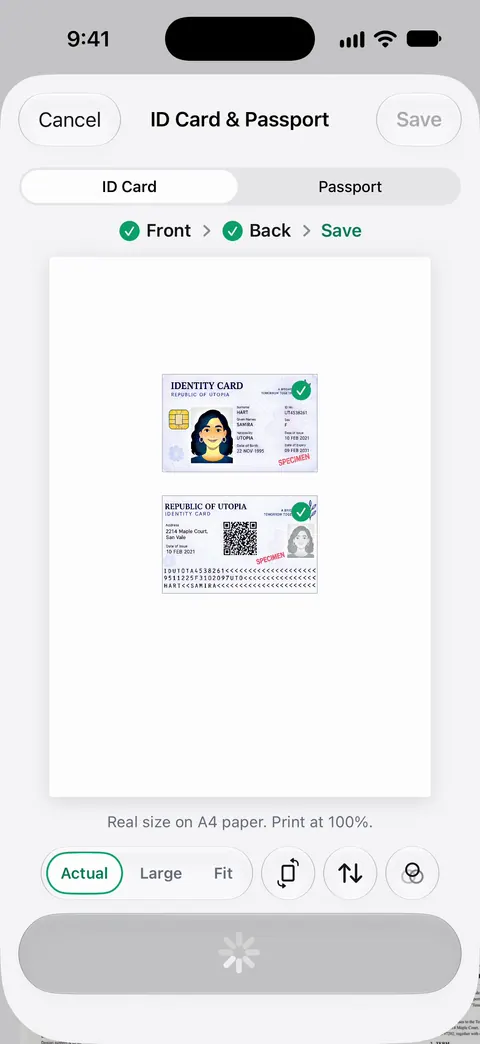
Scanner One helps make copies you can trust enough to shred the paper. Point your camera at any piece of paper. Scanner One finds the edges, straightens the page, cleans it up and saves a real PDF. Scanner One makes searchable PDFs. ID cards and passports are scanned with both sides on one printable page. And Search looks inside the text of every document and shows the matching line and page.
What it can’t do: no scan, from any app, replaces the originals on the keep list above. And Deleted documents wait in Recently Deleted for 30 days before they are deleted for good. That’s a safety net for a mistake in the app, not a backup.
Needs You gathers bills due, return windows and IDs about to expire on Home, from your own papers.
The keep or shred chart puts all of this on one printable page.
Questions and answers
Can I shred my birth certificate after scanning it?
No. The FTC lists birth certificates among the papers to keep forever and lock up. Offices that ask for one often want the original or a certified copy, and a scan is neither.
How long should I keep pay stubs?
The FTC puts pay stubs in its keep-for-a-year group, and suggests you can shred the paper if you can access them electronically. Check them against your W-2 before you get rid of them.
Should I keep paper tax returns?
Keep tax returns and the records behind them for at least three years; the IRS gives longer periods in some cases, such as 6 years if you under-reported income by more than 25%. A scan of each return makes later questions easier to answer.
What should I do with old IDs?
The FTC lists expired credit cards, driver’s licenses and other IDs as things to shred. Passports are a separate case: the FTC’s keep list names valid passports. Check your passport office’s renewal rules before you destroy an old one.
Sources
What this page says about Scanner One was checked against the app on .
- FTC Consumer Alert, Protecting your personal information: Which documents to keep and which to shred — the keep-for-a-year, three-year, while-you-own and forever lists, the shred list, and shred days; June 10, 2025
- IRS, How long should I keep records? — 3, 4, 6 and 7 years and indefinitely, and property records; page last reviewed or updated 2026-06-30
- IRS, Publication 583, Starting a Business and Keeping Records — electronic records and when paper originals may be destroyed; revision 12/2024, page last reviewed or updated 2026-04-30
- Scanner One on the App Store — the app’s own listing: scanning, searchable PDFs and ID cards
Get Scanner One
Scanner One is free, with generous limits: scanning, clean PDFs and text search never stop.

Scanner OneScan, sign and ask anything
Scanner One is free, with generous limits: scanning, clean PDFs and text search never stop.