
Checklist
Documents you need to sell a house: the seller’s checklist
Gather proof you own the home (the deed and your title insurance policy), your ID, the mortgage lender’s details for a payoff quote, recent property tax bills, HOA documents if you have an association, and your state’s seller disclosure form. Homes built before 1978 need the federal lead paint disclosure. Pull together receipts for improvements, warranties and permits. After closing, keep the settlement statement and any Form 1099-S with the records of what you paid and improved, generally until 3 years after the tax return for the year of the sale is due.

This is general information, not legal or tax advice. Disclosure rules and closing customs differ by state, and tax rules change. Ask your agent, closing attorney or a tax professional about your sale.
Sellers who gather their papers before listing answer buyers’ questions faster and avoid surprises at closing. Some of these papers also decide how much tax you owe on the sale, so this list covers both.
Proof of ownership
- The deed: your recorded deed. If you can’t find it, the county recorder keeps a copy.
- Owner’s title insurance policy: from when you bought.
- Photo ID: for every owner on the deed.
- Papers that change who can sign: a power of attorney, a trust, a divorce decree, or an executor’s letters if you’re selling for an estate.
- Survey or plat: if you have one.
The mortgage and other liens
- Your mortgage lender’s details: the loan number and the servicer’s contact, so the closing agent can order a payoff statement.
- Home equity loan or line of credit: the same details.
- Any other liens: judgments or contractor liens, and proof of release if they’ve been paid.
Property costs buyers will ask about
- Property tax bills: the last year or two.
- Utility bills: average costs for electricity, gas, water and trash.
- HOA documents: the rules, recent minutes, the budget, dues and any special assessments.
- Service contracts: solar leases, security systems or pest control that may transfer.
Disclosures
- Your state’s seller disclosure form: what you know about the roof, foundation, water, systems and past repairs. The form and what it must cover differ by state; your agent or state real estate commission has it.
- Lead paint disclosure: for homes built before 1978, you must disclose any known lead paint and hazards, hand over every report you have, give buyers the EPA’s pamphlet and put a lead warning statement in the contract. Buyers get 10 days for a lead inspection unless you both agree otherwise in writing. Keep signed copies for 3 years after the sale.
- Past inspection reports: radon, mold, sewer line or a pre-listing inspection, if you have them.
Improvements, repairs and warranties
- Receipts for improvements: a new roof, an addition, windows, a remodeled kitchen. Buyers like seeing them, and they matter for your taxes (below).
- Permits and final inspections: for work that needed a permit.
- Warranties: for the roof, appliances, HVAC and any transferable home warranty.
- Manuals and codes: appliance manuals, alarm and garage codes, for the buyer at closing.
At and after closing
- Settlement statement or Closing Disclosure: showing the sale price, payoff and your costs.
- Form 1099-S: if the closing agent files one, it shows the gross proceeds and the date of sale.
- Wiring instructions for your proceeds: confirmed by phone with your closing agent at a number you already know, never from an email.
- Keys, garage remotes and mailbox keys.
Records to keep for taxes
When you sell, your gain is the sale price minus your adjusted basis: roughly what you paid, plus improvements, minus certain items. Many owners can exclude some or all of the gain if they meet the IRS’s ownership and use tests. Either way, keep:
- Your purchase Closing Disclosure or settlement statement.
- Receipts for every improvement.
- The sale’s settlement statement and any Form 1099-S.
The IRS says to keep these generally until 3 years after the due date of your tax return for the year you sold. If you received a Form 1099-S, you must report the sale even if the gain is excludable. How long to keep tax records has the wider rules.
Mistakes that slow a sale
- Discovering an old lien or an unrecorded payoff during the title search.
- A missing permit for a finished basement or addition.
- One co-owner unavailable to sign, with no power of attorney.
- No receipts for improvements when it’s time to work out the gain.
- Proceeds wired to instructions that arrived by email.
Scan and keep them safely
Before you list, scan your deed, past inspection reports and improvement receipts into a few PDFs, one per subject: scan several pages into one PDF. Send buyers’ agents a copy, never the original. If a file is too big for email, make it smaller. When you’re done, the moving paperwork and keeping warranties in one place help with the next home.
Where Scanner One helps, and where it doesn’t
For a few pages, the Notes app or the Files app scans them into one document, which is enough to send a copy.
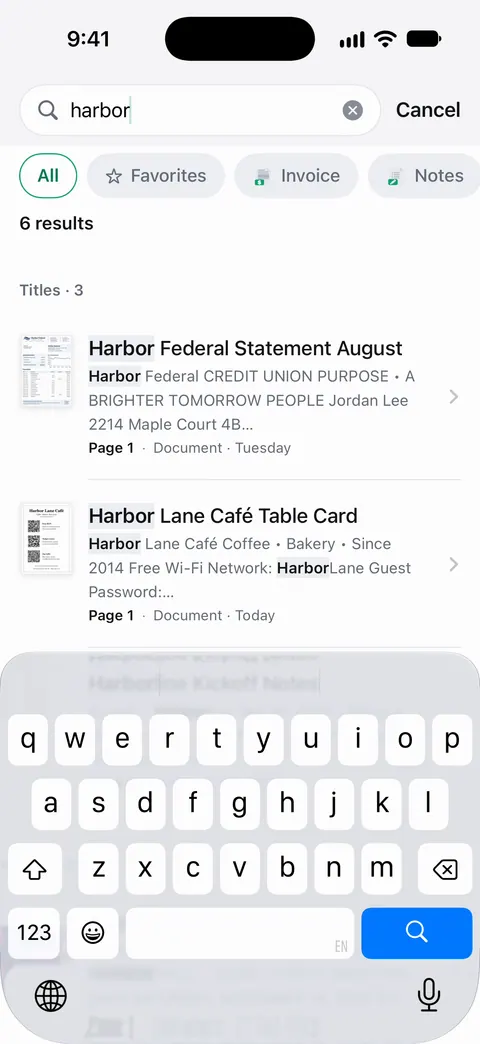
Scanner One helps most with the years of receipts behind your basis. Scans come with Auto Clean, Color, Grayscale and Receipt filters. Search looks inside the text of every document and shows the matching line and page. Find the roof invoice by typing “roof”. Ask your documents anything. When does the lease end? What did I spend at the shop? The answer comes back with the page it came from. Free accounts can ask 3 questions a day.
The PDF tools merge, split, compress, password-protect, add page numbers and watermarks, and extract text. Free accounts can run them 3 a week. On a free account, pages you share, print or export carry a small “Scanned with Scanner One” label at the bottom right. Pro removes it. Documents stay on your iPhone unless you share them or turn on iCloud Sync.
Scanner One doesn’t fill in your state’s disclosure form, work out your tax or replace a closing attorney.
Questions and answers
What if I can’t find my deed?
The deed is recorded with the county where the home is, usually the county recorder or register of deeds. You can request a copy there, often online. The title company handling your sale may also pull it for you.
Do I have to pay tax when I sell my house?
Many sellers can exclude some or all of the gain if they owned and lived in the home long enough. The IRS’s Topic 701 and Publication 523 explain the ownership and use tests. If you receive Form 1099-S, you must report the sale even when the gain is excludable.
Why do I need receipts for old renovations?
What you spent on improvements is added to what you paid for the home, which can lower the taxable gain when you sell. The IRS says to keep records that document the home’s adjusted basis.
What is the lead paint disclosure?
For homes built before 1978, federal law requires sellers to disclose known lead paint and hazards, hand over any reports, give buyers the EPA pamphlet and include a lead warning statement in the contract. Keep a signed copy for 3 years after the sale.
Sources
What this page says about Scanner One was checked against the app on .
- IRS, Topic 701: Sale of your home — ownership and use tests, reporting the sale when you get Form 1099-S; last reviewed 2026-11-09
- IRS, Publication 523: Selling your home — records of adjusted basis and how long to keep them, Form 1099-S boxes; for 2025 returns, last reviewed 2026-04-30
- EPA, Real estate disclosures about potential lead hazards — seller duties for pre-1978 homes and keeping signed disclosures 3 years; updated 2026-05-27
- CFPB, After closing — the Closing Disclosure from your purchase helps when you sell; last modified 2024-12-12
- CFPB, Mortgage closing scams: how to protect yourself and your closing funds — confirm wiring instructions by phone, never from an email; archived post, last modified 2026-06-25
- Apple Support, Scan documents on your iPhone or iPad (108963) — scanning several pages in Notes and Files; published 2026-02-13
- Scanner One on the App Store — the app’s own listing
Get Scanner One
Scanner One is free, with generous limits: scanning, clean PDFs and text search never stop.

Scanner OneScan, sign and ask anything
Scanner One is free, with generous limits: scanning, clean PDFs and text search never stop.