
Checklist
Estate planning documents to gather and keep
Most estate plans rest on a few legal documents: a will, a durable power of attorney for finances, and often a living trust, plus advance directives for health care (a living will and a durable power of attorney for health care). Around them, gather the records your family would need: ID and vital records, bank, retirement and insurance details, your latest tax return, deeds and titles, debts, and a list of contacts. Keep the papers in one place, tell someone you trust where, and review them once a year.

This page is for planning ahead: the documents that make up an estate plan and the records your family would need to find. It’s a different job from an emergency document binder, which is about grabbing papers in a crisis. The lists follow the National Institute on Aging’s checklist, read on 13 November 2026.
This is general information, not legal, tax or financial advice. Estate law is set by each state, and what a valid will or power of attorney needs varies. Talk with a lawyer licensed in your state before you sign anything, and check your state’s own forms.
The legal documents at the core
For your estate and money
- Will. Says how your property, money and other assets are distributed when you die. It can also name a guardian for children under 18, cover adult dependents and pets, and set out funeral wishes. Without one, your state’s laws decide.
- Durable power of attorney for finances. Names someone to make financial decisions for you if you can’t.
- Living trust, if you choose one. Names a trustee to hold and distribute property and funds for you when you can no longer manage them.
For your health care
- Living will. Tells doctors which treatments you’d want or avoid if you can’t decide for yourself in an emergency.
- Durable power of attorney for health care. Names your health care proxy, the person who decides for you if you can’t communicate.
- Medical orders, such as a do-not-resuscitate order, if you have them.
- Permission forms letting your doctor, lawyer, bank or insurer talk with your caregiver. NIA notes this is different from naming a proxy.
The records your family will need
Keep the papers, or a list of where each one is.
Personal
- Full legal name, Social Security number, legal residence, date and place of birth.
- Where to find birth and death certificates, and certificates of marriage, divorce, citizenship and adoption.
- Names and addresses of your spouse and children.
- Employers and dates of employment.
- Education and military records.
- Contacts: close friends, relatives, doctors, lawyers, financial advisors, religious contacts.
Financial
- Sources of income and assets: pensions, IRAs, 401(k)s, interest.
- Social Security information.
- Insurance policies (life, long-term care, home, car), with policy numbers and agents’ contacts.
- Bank and credit union accounts, with account numbers.
- Investments (stocks, bonds, property) and your broker’s contact.
- A copy of your most recent income tax return.
- Where the original will is, the one with your signature.
- Debts and what’s owed: property tax, mortgage, loans, and how and when each is paid.
- Where the original deed to your home is.
- Car titles and registrations.
- Credit and debit cards.
- Where the safe deposit box and its key are.
Health
- Current prescriptions, kept up to date.
- Your living will and health care power of attorney.
- Health insurance details, with policy and phone numbers.
Wishes beyond the paperwork
- Organ or brain donation, if you’ve registered or decided.
- Funeral or memorial wishes, burial or cremation.
- Your pet’s vet, if you have a pet.
Where to keep it
- One place. NIA suggests a file, a drawer, or a notebook listing what’s where. A fireproof and waterproof safe adds protection.
- Copies at home if originals are in a bank safe deposit box.
- A digital copy too. Ready.gov suggests keeping copies in a safe deposit box, on an external drive or in the cloud, so you can reach them in a disaster.
- Tell someone. A person you trust, or your lawyer, should know where the papers are. They don’t need to read them.
Getting the documents made
- Advance directives: most states provide the forms free, and you can complete them yourself.
- Wills, powers of attorney and trusts: NIA suggests talking with a lawyer, and asking about fees first. Your local bar association can point you to free legal aid.
- If you’ll act for someone else: the Consumer Financial Protection Bureau has free plain-language guides for power of attorney agents, trustees, guardians and government fiduciaries.
Mistakes families run into
- Nobody knows where the original will is.
- A safe deposit box only the deceased could open, holding the only copy.
- Documents never updated after a divorce, a move or a new grandchild.
- A health care proxy who was never told what you want.
- Passwords and account lists that exist only in one person’s head.
Keeping it current
Review your plans at least once a year and after any big change. For the online side (accounts, photos, passwords), see digital legacy documents for family. Where to keep important documents on iPhone compares the places on your phone. If you’re doing this for a parent, sorting a parent’s papers walks through it. More lists are on the checklists hub.
Where Scanner One helps, and where it doesn’t
Scanner One doesn’t write a will, make a document legally valid or replace a lawyer. Keep signed originals where they belong.
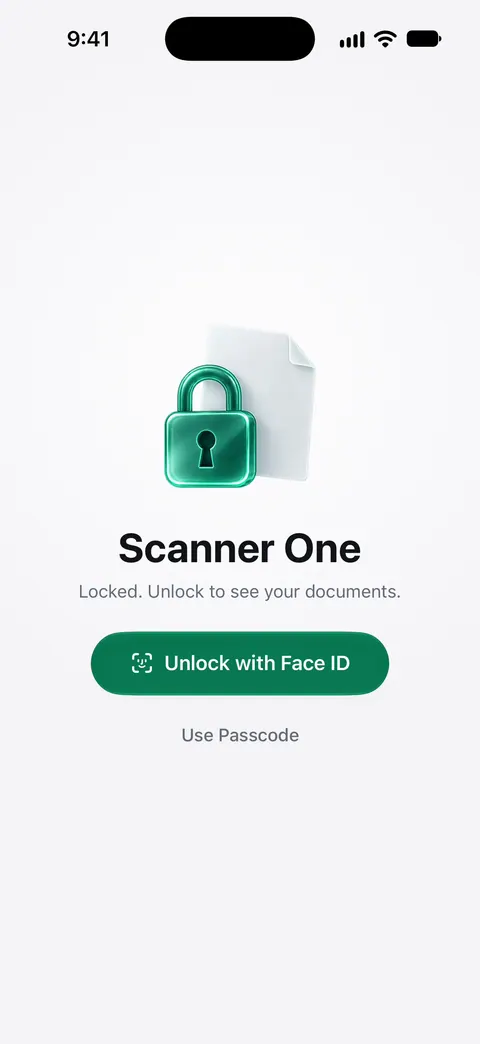
What it can do is hold a searchable copy of the rest. A scan can have many pages, and you can reorder them. Search looks inside the text of every document and shows the matching line and page. So “policy number” or “safe deposit” turns up the right page. You can lock the app with Face ID. Documents stay on your iPhone unless you share them or turn on iCloud Sync. Locking documents with Face ID explains the options on iPhone.
Coming in 1.0.1. Folders can be shared through iCloud. Joining is free; sharing is part of Pro. That lets the person you trust see the folder you keep. See shared folders.
Questions and answers
What are the main estate planning documents?
The National Institute on Aging names a will, a durable power of attorney for finances and a living trust for your estate, and a living will and a durable power of attorney for health care for medical decisions. Which ones you need depends on your situation and your state’s laws.
Where should I keep my original will?
Somewhere safe that someone you trust can reach. NIA suggests a single file, drawer or fireproof and waterproof safe, and says that if papers are in a bank safe deposit box, keep copies at home. Tell a trusted person or your lawyer where the original is.
Do I need a lawyer for estate planning?
Not for everything. NIA says most states provide advance directive forms for free that you can fill in yourself, and suggests talking with a lawyer about powers of attorney, joint accounts and trusts. Your local bar association can point you to legal aid.
How often should I update my estate planning documents?
NIA recommends reviewing your plans at least once a year and whenever a major life event happens, such as a divorce, a move or a big change in your health.
Is a scanned copy of a will valid?
Treat a scan as a reference copy that helps your family find information. Whether a copy can ever stand in for a signed original is a question for your state’s law and your lawyer, so keep the original safe and write down where it is.
Sources
What this page says about Scanner One was checked against the app on .
- National Institute on Aging, Getting Your Affairs in Order Checklist: Documents to Prepare for the Future — the will, durable power of attorney for finances, living trust, living will and health care proxy, the lists of personal, financial and health records, where to keep them, reviewing once a year; read 2026-11-13
- Consumer Financial Protection Bureau, Managing someone else’s money — free guides for power of attorney agents, trustees, court-appointed guardians and government fiduciaries; last modified 2026-06-25
- Ready.gov, Financial preparedness — keeping copies of important documents in a safe deposit box, on an external drive or in the cloud; last updated 2026-03-13
- Scanner One on the App Store — the app’s own listing
Get Scanner One
Scanner One is free, with generous limits: scanning, clean PDFs and text search never stop.

Scanner OneScan, sign and ask anything
Scanner One is free, with generous limits: scanning, clean PDFs and text search never stop.